In switching power supplies, DC-DC converters, and industrial power modules, common-mode chokes are key components for suppressing common-mode noise and ensuring EMI compliance. However, when the current increases from a few amperes to over ten or even twenty amperes, the difficulty of selection increases significantly – insufficient inductance will compromise filtering effectiveness, excessively high DCR will bring additional loss and heat, and insufficient rated current may lead to saturation failure.
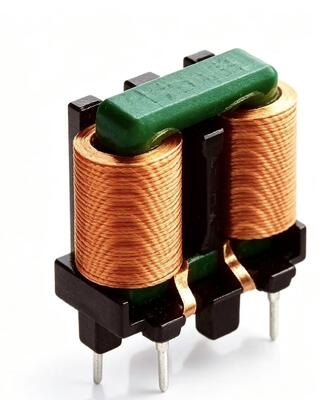
The SHINHOM ETH2321 series high current common mode choke covers an inductance range of 70µH to 480µH, with a rated current of up to 20A. Common-mode impedance reaches up to 1920Ω at 10MHz. With four different models available, how do you quickly select the one that best matches your application?
1. Step One of Selection: Confirm Inductance
Inductance determines the impedance characteristics of the common-mode choke within the target frequency band. The ETH2321 series offers four inductance levels:
| Model |
Inductance (Min.) |
Applicable Scenarios |
| ETH2321-700Y |
5.0mH |
Low-frequency band filtering requiring higher inductance |
| ETH2321-101Y |
10.0mH |
General-purpose switching power supplies, DC-DC converters |
| ETH2321-281Y |
10.0mH |
Mid-to-high frequency band filtering requiring higher impedance |
| ETH2321-481Y |
25.0mH |
High-frequency band filtering requiring extremely high impedance |
Selection Recommendation: First confirm the common-mode noise frequency band that the system needs to suppress. When the noise frequency is low, prioritise models with higher inductance. When the noise frequency is high, the inductance requirement can be appropriately reduced, shifting focus to the common-mode impedance specification.
2. Step Two of Selection: Confirm Rated Current
The rated current must cover the system's maximum continuous operating current with a certain margin. The current capabilities of the four ETH2321 series models are as follows:
| Model |
Rated Current (@40°C temperature rise) |
| ETH2321-700Y |
20A |
| ETH2321-101Y |
18A |
| ETH2321-281Y |
10A |
| ETH2321-481Y |
7A |
Selection Recommendation: The system's maximum operating current should be lower than the rated current. A margin of 20%-30% is recommended to avoid overheating caused by current fluctuations or harmonics. The ETH2321-700Y (20A) and ETH2321-101Y (18A) are suitable for high-power server power supplies and industrial power supplies. The ETH2321-281Y (10A) and ETH2321-481Y (7A) are suitable for medium-power applications.
3. Step Three of Selection: Evaluate DCR and Efficiency
DCR (DC resistance) directly affects the conduction loss of the common-mode choke. The higher the DCR, the greater the loss, the more serious the heat generation, and the lower the system efficiency. The DCR range of the ETH2321 series is from 1.35mΩ to 13.93mΩ:
| Model |
DCR (Max.) |
Conduction Loss at Rated Current |
| ETH2321-700Y |
1.35mΩ |
Lower |
| ETH2321-101Y |
1.87mΩ |
Lower |
| ETH2321-281Y |
7.02mΩ |
Medium |
| ETH2321-481Y |
13.93mΩ |
Higher |
Selection Recommendation: For applications with high efficiency requirements (such as server power supplies and communication power supplies), prioritise models with lower DCR (700Y or 101Y). For scenarios where filtering performance is more important than efficiency (such as industrial frequency converters), higher DCR is acceptable.
4. Step Four of Selection: Confirm Common-Mode Impedance
Common-mode impedance is the core indicator for measuring the filtering effectiveness of a choke. The higher the impedance, the stronger the suppression capability against common-mode noise. The common-mode impedance of the ETH2321 series at 10MHz is as follows:
| Model |
Common-Mode Impedance @10MHz |
| ETH2321-700Y |
452Ω |
| ETH2321-101Y |
600Ω |
| ETH2321-281Y |
1230Ω |
| ETH2321-481Y |
1920Ω |
Selection Recommendation: When the target noise frequency band is around 10MHz, prioritise models with higher common-mode impedance (481Y or 281Y). If the noise frequency band is lower, the impedance requirement can be relaxed appropriately.
5. Step Five of Selection: Confirm Withstand Voltage and Operating Temperature
Withstand Voltage: The ETH2321 series offers coil-to-coil withstand voltage of 1500VDC, meeting the isolation requirements of most switching power supplies and industrial power supplies.
Operating Temperature: The standard operating temperature range is -40°C to +125°C, with high-temperature versions reaching 150°C. In high-temperature environments such as automotive electronics and industrial control, confirm whether the actual operating temperature falls within this range.
Package: The ETH2321 series supports both SMT and THT terminal options, allowing selection based on production processes.

Application Matching Recommendations
| Application Scenario |
Recommended Model |
Matching Rationale |
| Server power supplies |
ETH2321-700Y |
20A high current, low DCR, suitable for high-power-density server power supplies |
| Communication equipment power supplies |
ETH2321-101Y |
18A current, low DCR, meeting the efficiency and reliability requirements of communication equipment |
| Industrial power modules |
ETH2321-281Y |
10A current, 1230Ω high impedance, suitable for wideband filtering requirements in industrial environments |
| Automotive electronics / BMS |
ETH2321-481Y |
1920Ω high impedance, suitable for the wide-temperature, high-reliability requirements of automotive electronics |
| DC-DC converters |
ETH2321-101Y / 281Y |
Flexible selection based on power level and filtering requirements |
Conclusion
When selecting a high-current common-mode choke, the key is to balance five parameters: inductance, rated current, DCR, common-mode impedance, and withstand voltage and temperature. The ETH2321 series covers a wide range from 7A to 20A and from 452Ω to 1920Ω through four models, adapting to various scenarios including switching power supplies, server power supplies, industrial power supplies, and automotive electronics.
For selection recommendations or customised solutions based on your specific circuit parameters (operating current, target noise frequency band, space constraints), please contact our technical team.

 Votre message doit contenir entre 20 et 3 000 caractères!